
Has something happened to you that makes the world seem full of toxic traps that might cause cancer? Are you overwhelmed and don’t know where to start?
I’m here to make it easier for you.
First I’m going to tell you my background and explain why I think you should take my advice anyway, and then I’m going to present you with a list of actions you can take. In the first part of this series, I’ll stick to actions that are both cheap and easy to make into habits.
I really want you to feel that these steps are doable and you can start with three easy non-toxic living changes right away.
The Canary’s Perspective on Non-Toxic Living
After all, I’ve done all of these but one myself (you’ll have to wait for part three to find out which one), so they can’t be that hard!
Of course, for me perhaps it was easier because I’m a canary. That’s what those of us who are sensitive to everything tend to call ourselves, referring to the canary in the coalmine that warned the coal miners of toxic situations. If the canary died, the coal miners knew there might be gasses such as carbon monoxide, and that they were also at risk.
It’s a fitting moniker, because most of the things we overly-sensitive react to are, in fact, unhealthy and potentially cancer-causing.
I’m sensitive to fragrance and other chemicals, mold, EMF’s, low frequency noise, and probably a few other things I’m forgetting to mention. In recent years I’ve learned that many (or perhaps all) of these sensitivities can be blamed on a medical condition called Mast Cell Activation Syndrome (MCAS), and I’m currently getting treated for that.
But if I ever do rid myself of MCAS symptoms, that doesn’t mean I’m going to go back on my decision to embrace non-toxic living. That’s because I want to keep my risk of cancer and other life-threatening illnesses low.
Full disclosure – I’m not just a savvy consumer, I studied a little known field called Building Biology and worked as an environmental consultant for several years.
I first started adopting a non-toxic lifestyle in 2009, and by now these things are second nature to me. So when a friend recently told me he was finally switching from a plastic water bottle to a glass one, inside I was thinking, “How did you not know that already?”
Thus my motivation to write this article. There are lots of folks out there for whom non-toxic choices aren’t second nature. Maybe you haven’t had to worry about it until now. So this series is for you.
3 Super Easy Non-Toxic Living Changes to Adopt Today
Let’s start with just three, ok?
These changes you can make are so easy or low-budget, that you really shouldn’t have any problem embracing them!
1. Open Windows Everyday
Our homes are full of stuff, and unfortunately a lot of the stuff we own off-gasses chemicals that can be harmful to us, our kids, and our pets. The same goes for the finishings used to beautify our homes – the paint, carpet, and other flooring.
Without removing all that stuff from our households, there’s an easy way to help deal with the off-gassing: open your windows every day.
Fresh air will help remove VOC’s, and with an added bonus, it will also lower the build up of carbon dioxide indoors. When carbon dioxide builds up indoors, it can make you sleepy and cause headaches. There’s no way to remove it apart from bringing in fresh air from outdoors. Houseplants can help a little, but not as much as simply opening the windows.
This change is totally free and you need only work this into your daily routine.
I love having my windows open as much as possible. On days where the weather is too cold, I try to at least open them for a few minutes in the morning and again at bedtime. Fresh air at night helps me sleep better as well.

And of course, my house cats are much happier when the windows are open and they can smell and hear what’s going on outdoors so much more easily.
Think about how you can work this simple change into your daily routine, and once you give it a try, I bet you’ll feel the difference.
2. Avoid Fragrance in Cleaning and Personal Care Products
Fragrance is everywhere – in cleaning products, shampoo, laundry detergent, as well as in products where fragrance is the primary thing you’re paying for – air fresheners, perfumes, and so on.
Yet, fragrance is well known to cause both breast cancer and prostate cancer.
So if you’re trying to protect your health, it makes perfect sense to choose products that are fragrance free. Doing so might even save you some cash as you cut out perfumes, cologne, or air fresheners from your budget.
Unless you are a diehard fragrance fan, this change should also be really easy to adopt. It’s not that hard to reach for a container of fragrance free laundry detergent instead of one scented like a robot‘s idea of a fresh spring day!
Going fragrance free was supremely easy for me because with chemical sensitivities, artificial fragrance gives me headaches, and even worse, sometimes causes fight or flight reactions. I simply don’t understand why people think that such products smell “good.”
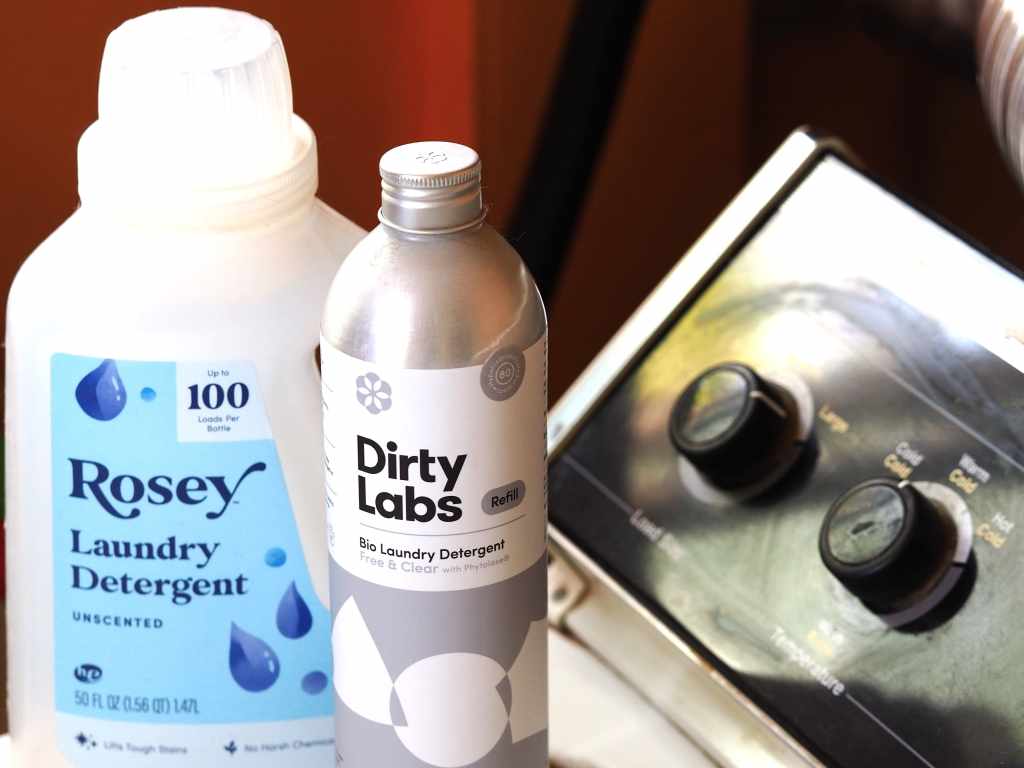
In addition to being health risks, they limit our understanding of what’s actually going on around us, masking reality with an artificial aroma.
If you aren’t sure about the safety of one of your products, you can check the Environmental Working Group (EWG) website to find ratings for specific products and ingredients.
3. Keep Wireless Devices Away From Your Body
If you want to protect yourself from cancer, be careful how you use wireless devices – particularly in regards to carrying your cell phone on your body.
Let’s go straight to some peer-reviewed research to motivate you with this step:
A UK study published in January 2024 tracked over 400,000, initially cancer-free people for a period of 10 years. This study looked at cell phone usage and who got cancer, and who didn’t.
Guess what they found? I’ll let the authors of this study say it in their own words:
“Mobile phone use was significantly associated with higher risks of incident overall cancer.”
“There was a dose–response relationship of length of mobile phone use with incident NMSC [non-melanoma skin cancer] in men and women, and prostate cancer in men.”
“Our findings underscore the importance of limiting mobile phone use or keeping a distance from mobile phone for primary prevention of NMSC and prostate cancer.”
This study apparently didn’t look at where cell phone users were keeping their phones – but we all know where most people keep their phones, don’t we? For guys, it’s in their pants pockets, for women, sometimes in their purses, but often in their bras!
Cell phone radiation is very powerful the closer you are to the source, but then drops off quickly. So keeping your cell phone inches from your genitals (either in your front or back pocket) is a lot riskier than keeping it a few feet away.

Without making any other changes to your cell phone habits, you can lower your risks if you stop keeping your cell phone close to your body. When you are on the move, carry your phone with you in your hand or in a backpack or purse away from the parts of your body you want to protect, and when you arrive at your destination, place it at least a few feet away from you.
For times when you need your cell phone close to your body, put it in airplane mode when it’s that close to you.
I changed my cell phone carrying habits before the advent of data-using apps, so I didn’t have a big before and after revelation when I made this habit change myself. However, I did get really big results with some other EMF-related changes, but I’ll tell you about those in parts two and three of this article series.
Something to consider is that cancer often develops very slowly. That’s why I was excited to find the the ten year long study I cited above. So you might not notice anything from one day to the next by changing where you place your cell phone, but over the long term, it might make a big difference!
Take Control, Protect Yourself
There’s no other way to put it: there are no governmental agencies protecting us from the toxic stuff in our lives, at least not in the US. We have to do the hard work ourselves, making the choices that will give us longer, healthier lives.
Hopefully these three steps will make starting on that hard work easy for you!
If you have any questions about how to make these three steps part of your daily routine, please let me know in the comments section below.
This is the first in a series of three articles on non-toxic steps you can take to protect yourself from cancer and other illnesses, so make sure to check your inbox for parts two and three. If you haven’t yet subscribed to the Hearthwilde blog, scroll down to the bottom of the page, where you’ll find the subscribe form.
 Hearthwilde