
I have been craving sauteed greens lately – and as our stocks of frozen spinach have started to disappear, I’ve been thinking about what’s in the garden.
Not the plants we are growing, however, but the weeds coming up between our rows.
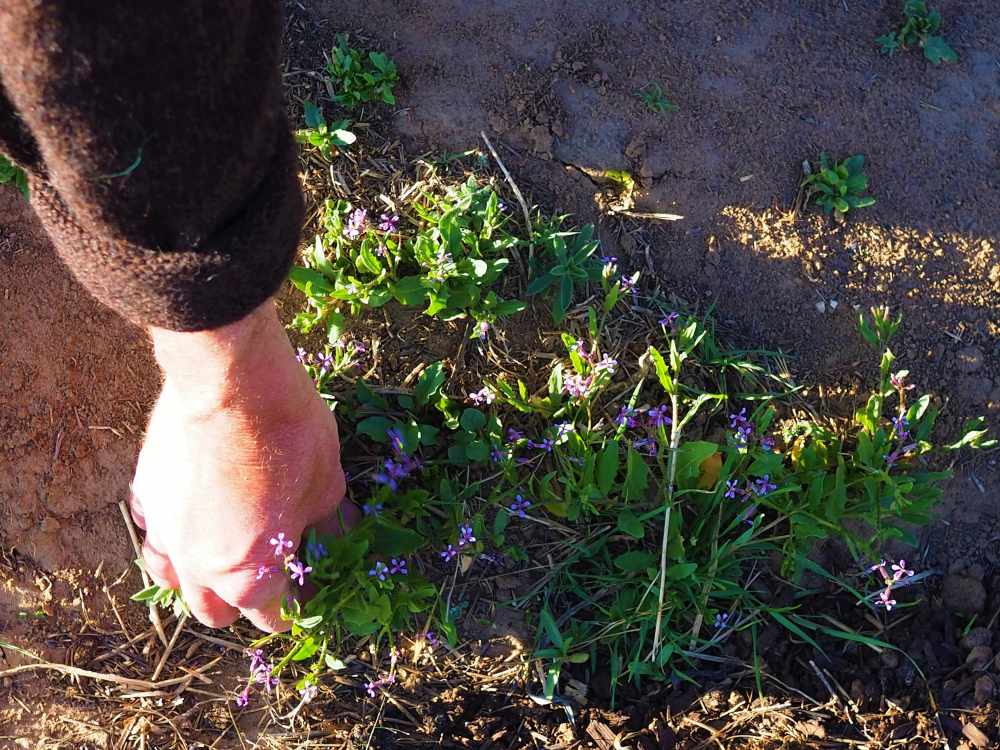
We ate lots of wild lettuce last year, so I went out to the garden in search of that plant. But what I noticed when I got there was a different one.
Eating weeds is not for the heedless or the faint-hearted – you need to be both careful and adventurous.
You need to correctly identify the plant, make sure you are 100% sure of your identification, and then know whether there are any special preparations needed to make the weed safe to eat.
For instance, pokeweed, a common weed in my native North Carolina, can be eaten – but only after multiple sessions of cooking to remove toxins that will otherwise give you a miserable stomachache. (Seems like too much work for me!)
But getting back to our pokeweed-free, dry garden in Utah – as I looked for wild lettuce, I noticed another plant growing much more abundantly.
One with tiny, purplish-blue flowers. Chad and I discussed it and came to the conclusion that it was probably a mustard.

I pulled out our weed book, Weeds of the West and searched for it – bingo! Blue mustard was it’s name-o.
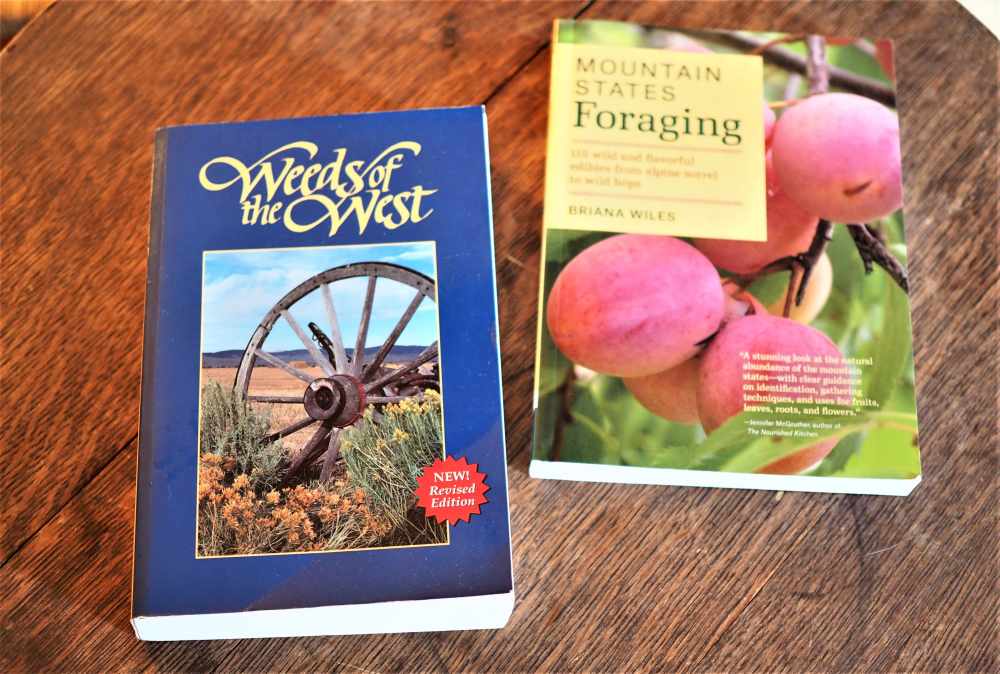
Then Chad pulled out one of our favorite foraging books, Mountain States Foraging, and looked up recommendations for how to eat it. No special precautions neccessary. Leaves, stems, and flowers are edible – either fresh or cooked.
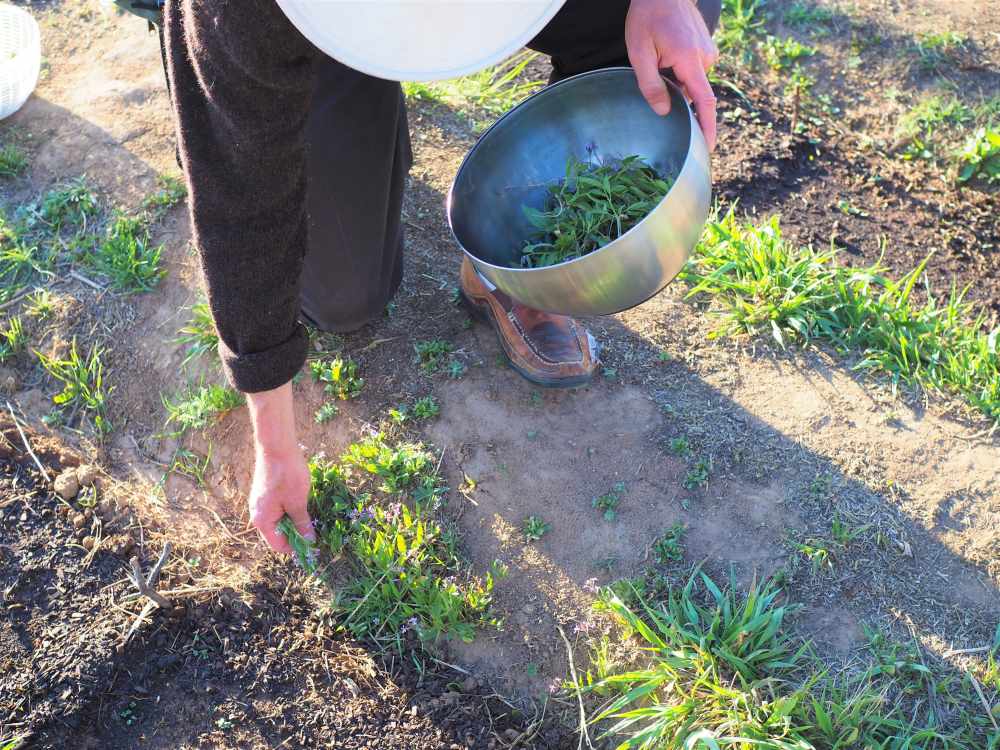
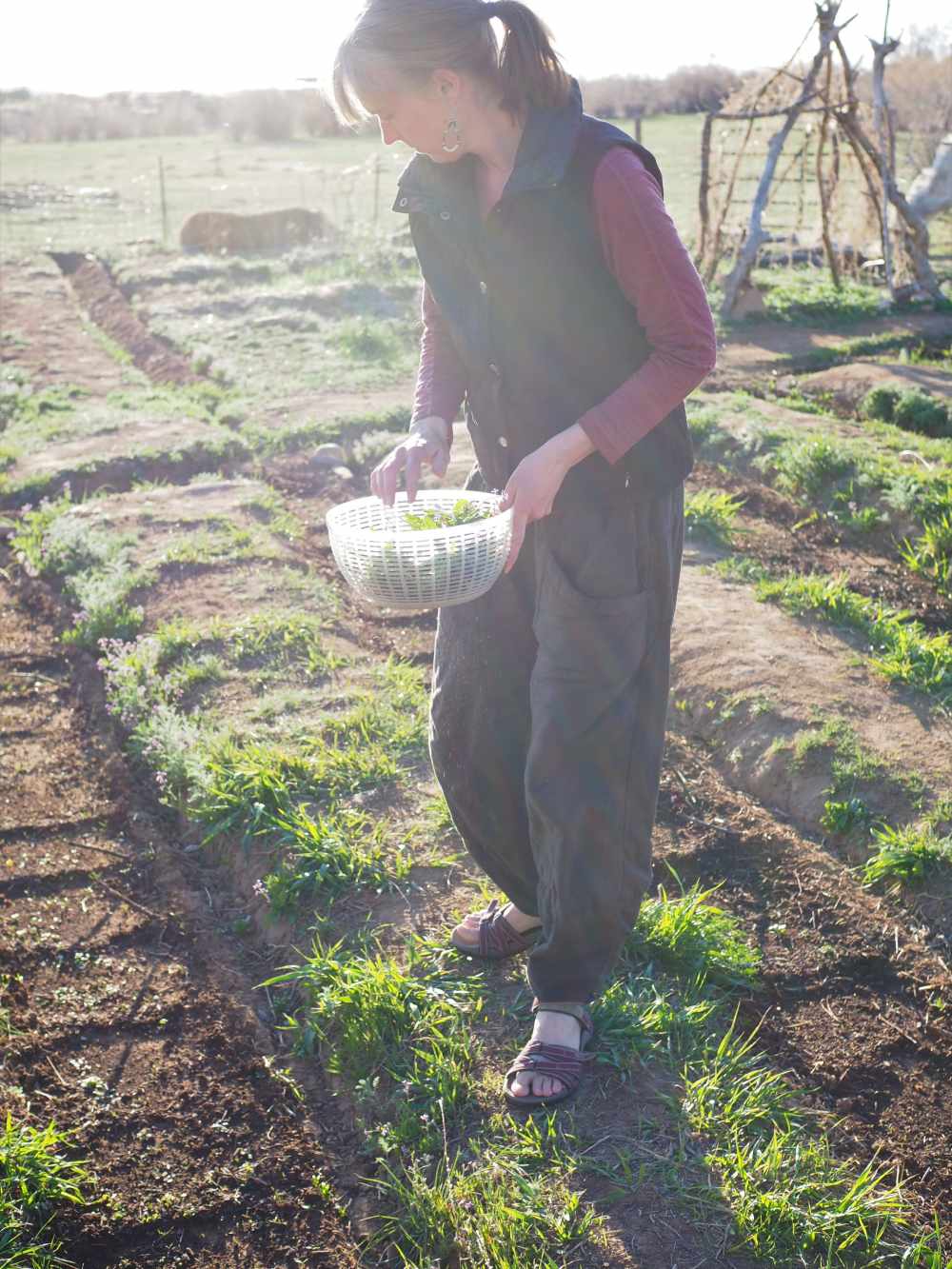
We headed out to the garden together just as the sun was making everything pretty – golden hour.
I have to say that foraging for weeds is better when there are two of you – that way if there’s any uncertainty, you can discuss and come to a decision together. Two minds considering the identity of a new weed are better than one.

Blue mustard grows in disturbed areas – like the spaces between our garden rows!
It doesn’t look that different from arugula, actually – one of its brassica relatives from the mustard family.

The most labor intensive part of the whole process was removing the leaves from the stems – which seemed hard, and probably fibrous, so I thought it best to focus on eating the leaves only for our first try.
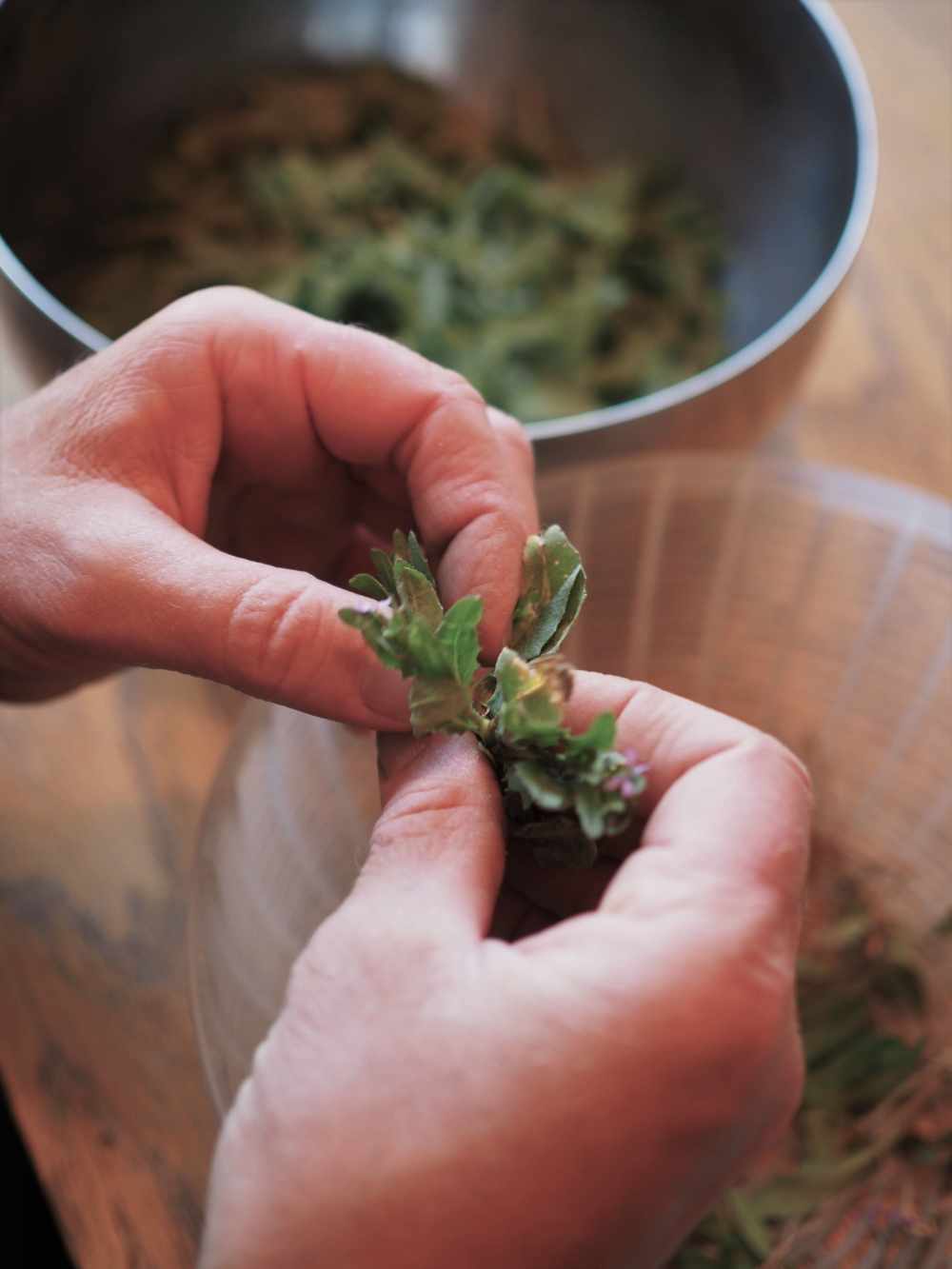
Since there were two of us working on the project it made it go faster.

Actually, we had some other interested parties trying to be of assistance too.
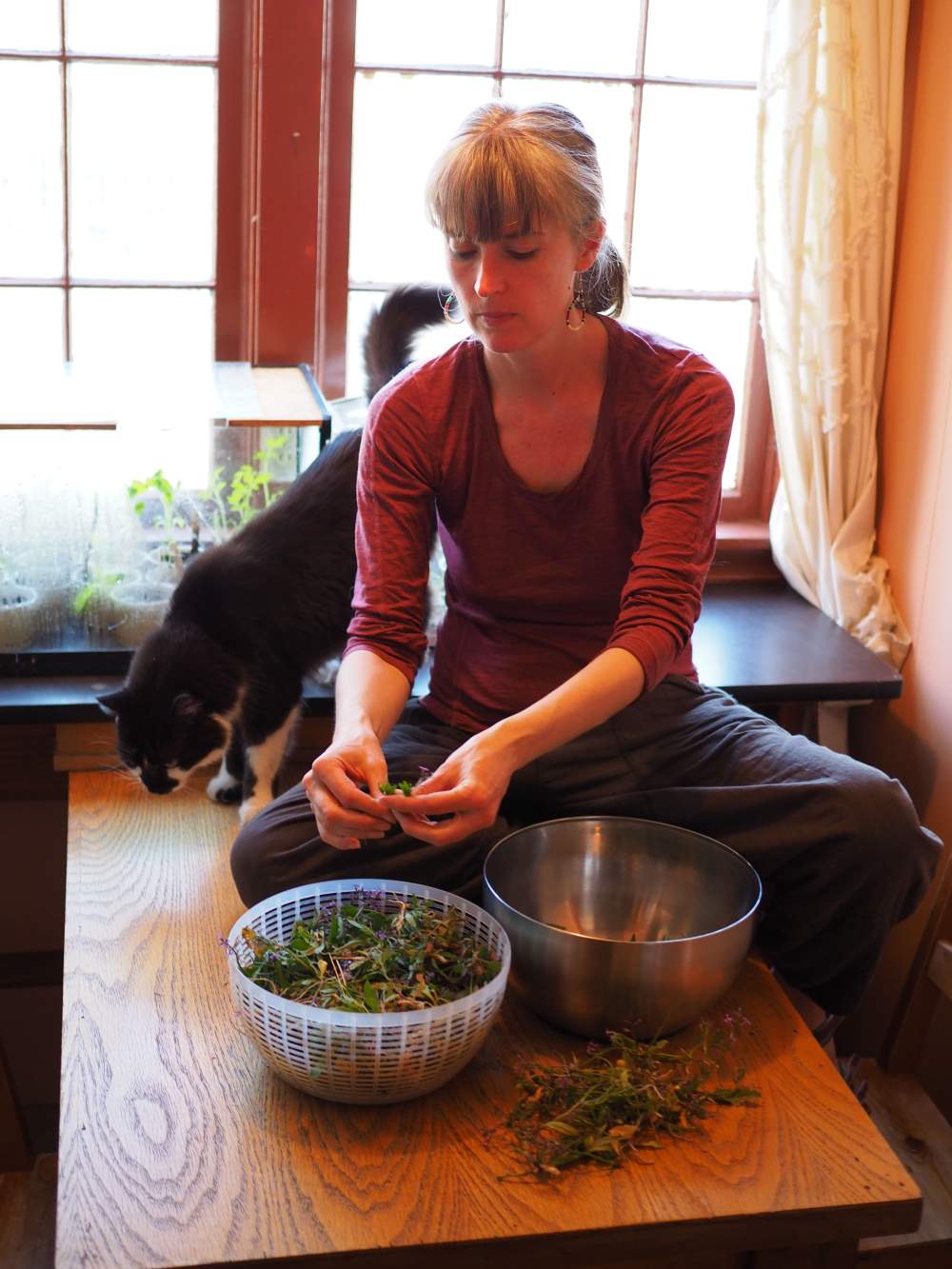
It took us about 10 minutes to gather a bowl full of it from the medians between our garden rows – and then probably another hour to remove the small leaves from the plants, clean them, and cook them.
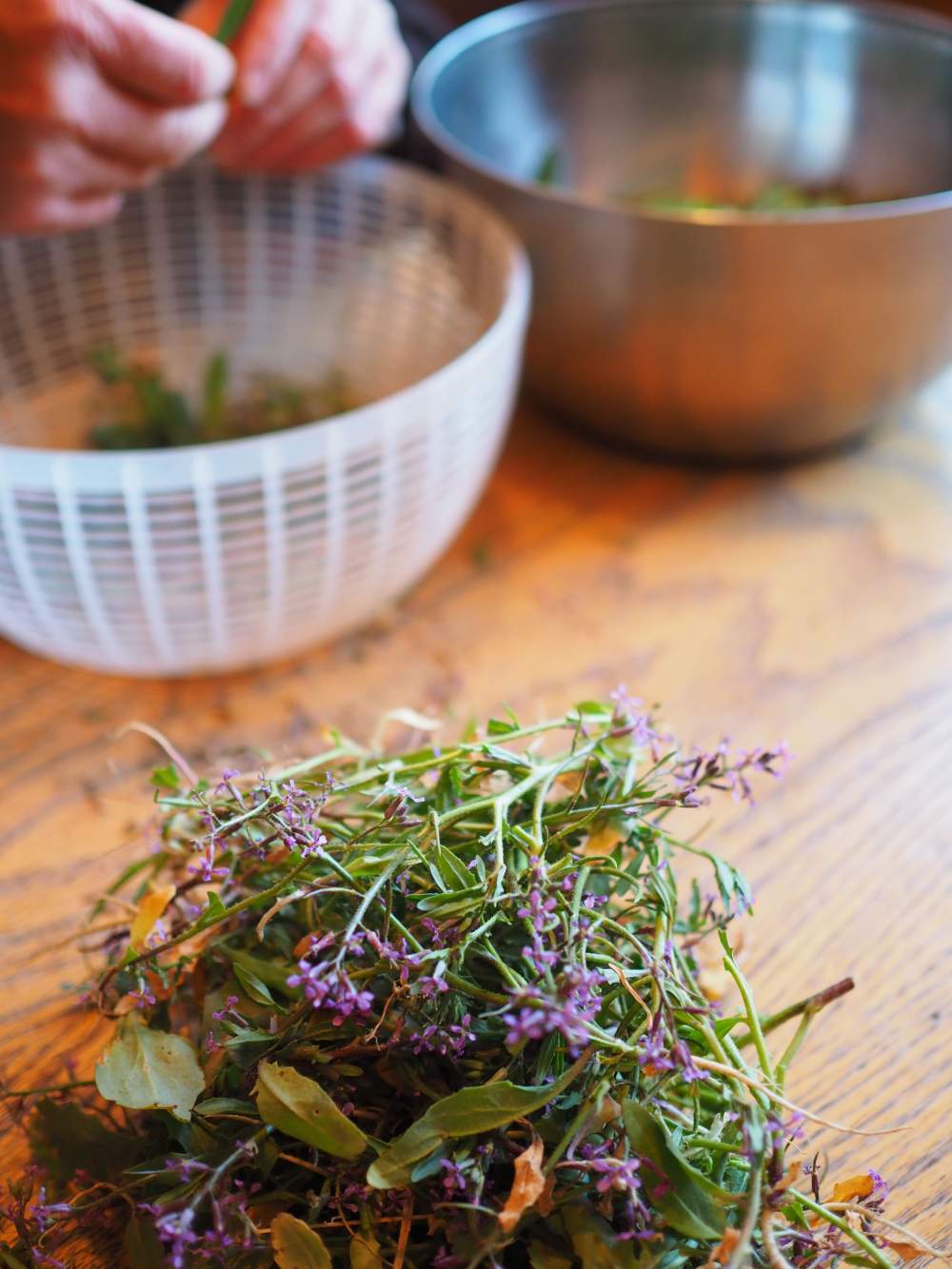
To cook our blue mustard, I heated up some olive oil in a skillet, added the blue mustard, then some sliced garlic, covered the skillet, and within a few minutes it was ready to eat.
As with any greens, they reduce in size dramatically when you cook them – a mixing bowl full turning into a couple of cups worth.
I served our sauteed blue mustard with carrot hash and anchovies.

Prepared this way, blue mustard tasted like a slightly bitter green – maybe a bit more bitter than the red mustard that we’ll be harvesting from our garden in a month or so, but not much.
Chad loved it – and I did too. It satiated my craving for greens.
And I can’t help think that there’s something funny about trying so eagerly to grow mustards of various sorts (red giant, mizuna) in our garden beds while ignoring the ones that are growing beside those beds with no planting, irrigation, or other care.
At least now we’re eating those too.
 Hearthwilde
I find the Edible Weeds so interesting. I like that you share what they taste like too.
Sent: Thursday, April 30, 2020 at 10:05 AM
LikeLike